What to Wear for Family Photos in Champaign, Illinois

Roberta Staske
Owner & Studio Director

What You'll Learn
One of the questions I hear most often from families planning a portrait session is also one of the most important: what should everyone wear?
Families want the group to look connected, but they do not want to look as though every person stepped out of the same package. The goal is a portrait where the clothing supports the relationships in the photograph rather than becoming the first thing you notice.
Successful family portrait clothing usually comes down to a few practical principles: coordination instead of matching, a simple shared color palette, attention to fit and comfort, thoughtful use of texture and layers, and choices that work with the location and season. When you know what to wear for family photos, the planning becomes part of the fun rather than a source of stress.
You do not need to arrive with professional styling knowledge. During our planning conversation, I help families in Champaign, Urbana, Savoy, and throughout Central Illinois narrow their options so the session feels relaxed and the finished portraits feel like your family.
The Most Important Rule: Coordinate, Do Not Match
If there is one principle I share with every family, it is this: coordinate, do not match.
Identical outfits — everyone in the same white shirt and the same pair of jeans — can make a family look like a uniform rather than a group of individuals who belong together. It removes the personality that makes a family portrait feel authentic.
Coordination works differently. Instead of dressing everyone identically, you choose a small shared palette of three or four compatible colors. Each person wears a different combination of those colors. One family member might wear a patterned dress that includes navy and cream, while another wears a solid navy shirt with denim. The colors repeat in small amounts across the group, creating a sense of connection without making everyone look the same.
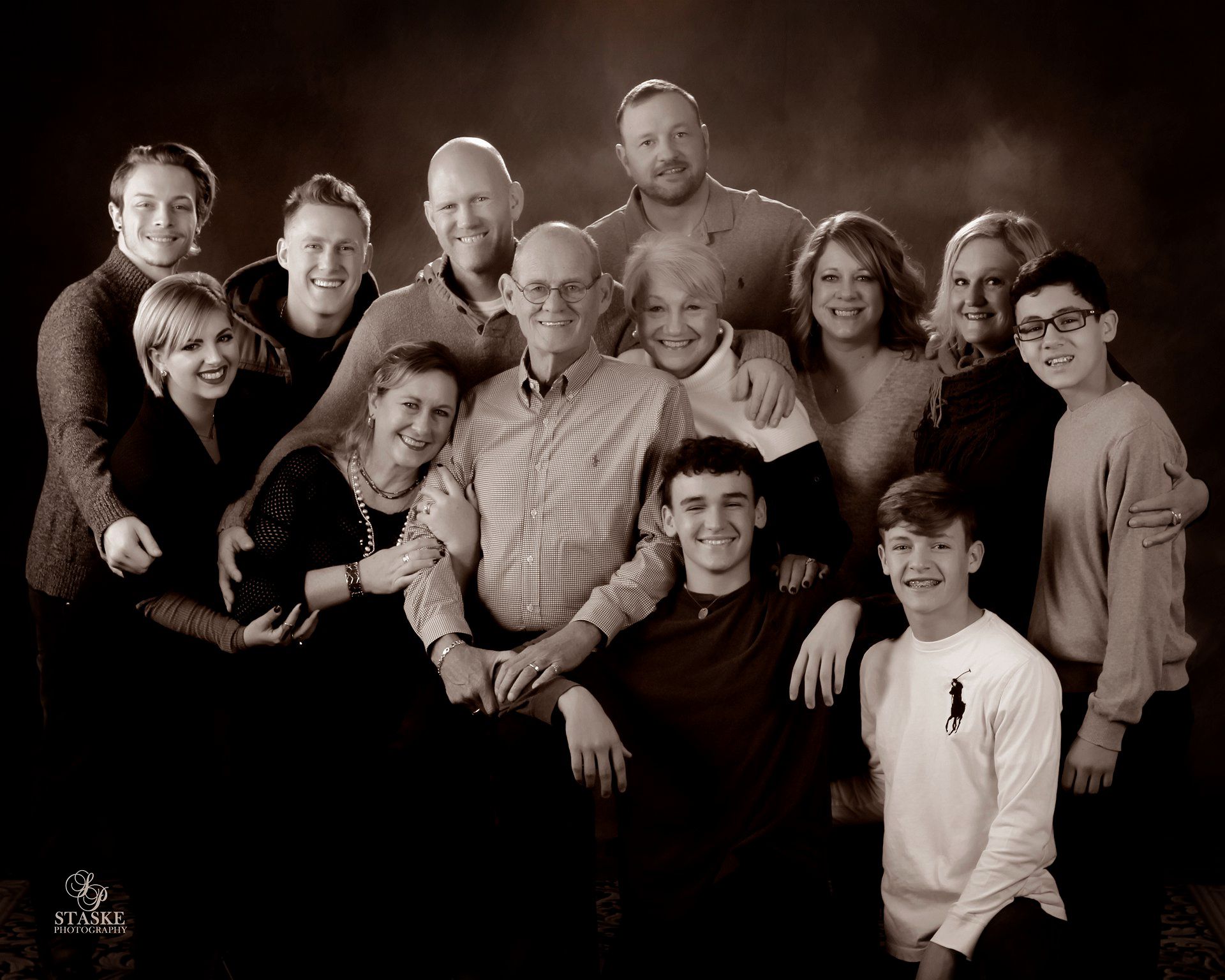
This approach also lets each person's clothing reflect their own style. A teenager who prefers a more casual look can still feel like themselves within the shared palette. A grandparent who feels most comfortable in a structured jacket can wear one without clashing with the rest of the group.
Consistency in formality matters too. If one person is dressed for a formal event and another is in a casual t-shirt, the gap can feel unintentional. A shared palette helps, but keeping the overall level of formality similar keeps the group feeling cohesive.
For a practical example, imagine a family of five. One parent wears a navy sweater with cream trousers. The other parent wears a rust jacket over a cream top. A teenage child wears a denim jacket with a navy shirt. A younger child wears a cream dress with a subtle rust pattern. Another child wears an olive shirt with denim. Every outfit shares colors with at least one other person, but no two people are dressed identically. The group looks connected without looking uniform.
Start With One Anchor Outfit
When families ask me where to begin, I usually suggest starting with one anchor outfit.
The anchor outfit is the single most visually important or hardest-to-find piece in the group. It might be a patterned dress that introduces the color palette, a child's special outfit that cannot easily be matched, a jacket with a distinctive color, a meaningful piece of clothing someone already owns and feels confident wearing, or an outfit that simply sets the tone for the session.
Once you have the anchor outfit, pull two or three supporting colors from it. Those colors become the palette that guides everyone else's clothing. The anchor outfit does not need to be copied by every person. It simply gives us a starting point so the rest of the group can be built around it.
Here is a step-by-step example. Suppose the anchor outfit is a floral dress in cream, soft blue, and sage green. From that dress, we pull cream, soft blue, and sage as the palette. One parent might wear a soft blue shirt with cream trousers. Another might wear a sage sweater with denim. A child might wear a cream top with a subtle blue pattern. Each outfit references the anchor without repeating it exactly.
If you already own a piece you love and feel confident in, start there. The best anchor outfit is one that makes at least one person in the family feel like themselves.
Choose a Simple Family Photo Color Palette
A workable family photo color palette usually includes three or four compatible colors. Trying to include more often creates visual noise. Using fewer can make the group feel flat.
A typical structure includes one or two neutrals and one or two supporting colors. Neutrals such as cream, ivory, denim, gray, or navy provide a foundation. Supporting colors add personality and visual interest. Within that structure, one color may be dominant while another serves as a smaller accent.
A few things to keep in mind:
- Neon colors can reflect onto skin, sometimes creating an unintended green or pink tint that is difficult to correct fully.
- Very bright, saturated colors can attract more attention than faces, pulling the eye away from the connection that makes a family portrait meaningful.
- Clothing that is all light or all dark creates different visual weight. A group dressed entirely in dark colors can feel heavy, while a group in all light colors can feel flat. Mixing light and dark pieces usually creates more dimension.
- If your portraits may become wall art, consider how the clothing colors will complement the room where the photographs will hang. A palette that works with your home makes the finished portraits easier to display.
The table below shows five palettes that work well for family portraits in a variety of settings.
| Palette | Suggested colors | Best suited for | Planning note |
|---|---|---|---|
| Soft neutral | Cream, camel, dusty blue, and denim | Relaxed family portraits and light natural settings | Use texture and tonal variation so the outfits do not blend together |
| Warm earth | Ivory, rust, olive, and navy | Autumn, prairie, or warm outdoor backgrounds | Keep rust or olive as an accent rather than putting everyone in the same strong color |
| Cool classic | Soft gray, navy, muted blue, and plum | Polished family portraits and cooler settings | Balance darker colors with lighter pieces near the face |
| Spring garden | Cream, sage, blush, and light blue | Spring greenery and soft garden environments | Do not depend on flowers or blossoms being present |
| Modern urban | Black, cream, taupe, and denim | Downtown or architectural backgrounds | Use shape and texture to prevent the palette from feeling flat |
Quick Tip: Test the Outfits Together
Before the session, place every outfit on a bed or floor and take one phone photograph of the complete group. This makes it easier to notice if one item is much brighter, more formal, more patterned, or visually heavier than everything else.
How to Use Patterns, Textures, and Layers
Patterns are not the enemy. One or two controlled patterns can add personality and help establish the color palette. A patterned dress or shirt can serve as the anchor outfit, giving us colors to pull from for the rest of the group.
What usually causes problems is several competing patterns at once. If three people each wear a different bold pattern, the eye does not know where to settle. The patterns compete with one another and with the faces in the photograph.
Tiny, tightly spaced patterns can also create a visual effect called moiré, where the pattern appears to shimmer or shift on camera. Narrow stripes and small checks are common culprits. Larger, more open patterns usually photograph more cleanly.
Texture, on the other hand, is one of the most effective tools for adding depth to a family portrait without adding visual noise. Linen, knitwear, denim, corduroy, wool, lace, and structured fabrics each interact with light differently. A cream linen shirt and a cream wool sweater are the same color, but the texture gives them distinct visual character.
Layers add variety too. A jacket, cardigan, scarf, or overshirt can change the mood of an outfit without requiring a completely new look. A family member can start a session with a jacket, then remove it for a few photographs to create a different feeling.
A few things to avoid: large logos, text, cartoon graphics, and brand marks pull attention away from faces. Too many bulky layers can limit comfortable movement, which matters when the session involves walking, sitting, or holding children.
Useful pattern combinations might include one patterned dress paired with solid pieces in supporting colors, or one subtle plaid shirt worn alongside solid tops in complementary tones. The key is restraint: let one or two patterns carry the visual interest while solids provide balance.
Dress for the Location and Season
Clothing should work with the location, not fight against it. A flowing dress that looks beautiful in a prairie may feel out of place in a downtown setting. A heavy sweater that complements a wooded trail may feel stifling on a warm summer evening.
For more ideas on where to create your portraits, explore these outdoor family photo locations in Champaign. The right setting can shape the clothing decisions, so it helps to plan both together.
Spring
Spring calls for lighter layers and soft or muted colors. Temperatures can still be cool, and the ground may be damp after rain. Choose footwear that can manage outdoor paths, and consider bringing a light jacket or cardigan that can be added or removed. Blossoms and flowers may be present, but they should not be the foundation of the color plan.
Summer
Breathable fabrics are essential in summer. Heat and humidity can make heavy layers uncomfortable, especially for children. Avoid dark, heavy fabrics that trap heat. If a shirt is sheer enough to show an undershirt, choose an undergarment that matches the skin tone or the shirt color. If the location requires walking, bring portrait shoes separately and change when you arrive.
Fall
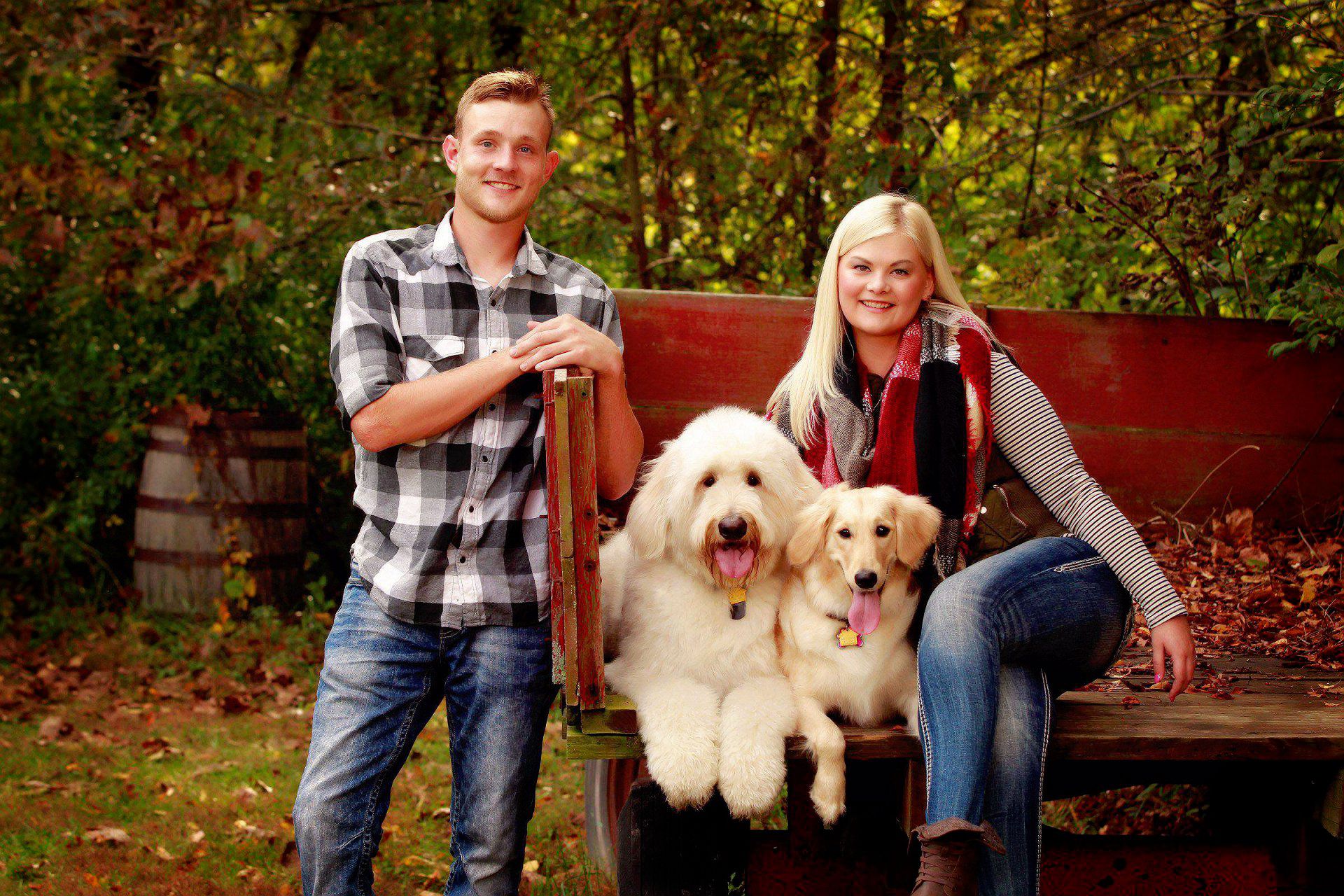
Fall is one of the most popular seasons for family portraits. Richer colors, controlled layering, knit textures, and boots all work beautifully. Navy, rust, olive, burgundy, cream, and denim are dependable choices. Avoid dressing the entire group in the same dark color, which can make the portrait feel heavy. Peak fall color is a bonus, not a requirement — clothing color and texture can create an autumn feeling even if the landscape is still green.
Winter
Winter portraits can be striking when the clothing is planned intentionally. Coordinated outerwear — a structured coat, a scarf in a palette color, or a layered look that feels deliberate — works far better than a random winter jacket thrown over a carefully selected outfit. Cold-weather comfort matters especially for children, so plan for warmth first. Studio or architectural settings can also be excellent when natural settings have less color. Snow should never be assumed.
The setting itself also shapes clothing choices. Natural outdoor settings pair well with earth tones, soft colors, and texture. Downtown or architectural settings can support bolder colors, structured pieces, and more modern styling. Studio portraits often benefit from clothing with clean lines and controlled color, since the background is simpler and the clothing becomes more prominent.
Choose Clothing That Fits and Allows Movement
Fit matters more than the size printed on a label. A family portrait session involves sitting, walking, holding children, bending, hugging, and adjusting a toddler who decided to head in the opposite direction. Clothing that looks good standing in front of a mirror may behave very differently once movement begins.
Straps that slip, collars that gap, waistbands that dig, and hems that drag all create distractions during a session. If a piece requires constant adjustment, it will show in the photographs — not because anyone did anything wrong, but because the clothing was not working with the movement the session required.
This is also why I recommend against wearing a brand-new outfit that has never been worn or tested. A dress that has never been sat in, a shirt that has never been buttoned, or a jacket that has never been raised above the elbow may surprise you in ways that are easier to discover before the session than during it.
The goal is comfort and confidence. Clothing should fit in a way that lets each person move naturally and feel present rather than self-conscious. Paul guides posture, body angle, hands, and expression during the portrait session, but clothing that fits well gives him more to work with.
Planning Outfits for Children, Grandparents, and Pets
Different family members have different needs. A little planning for each person helps the session run smoothly.
Young children
Comfortable fabrics and proper fit are the priorities for young children. Stiff formalwear or itchy tags can make a child miserable, and a miserable child is difficult to photograph beautifully. Choose clothing that allows easy movement and bring a backup outfit for spills or accidents. Familiar shoes are better than new ones that have not been broken in. Avoid clothing that requires constant correction — a strap that will not stay up or a collar that will not sit flat will create frustration for everyone.
Teenagers
Include teenagers in the planning conversation. Allowing personal style within the shared palette helps them feel like participants rather than props. Forcing an outfit that makes a teenager feel unlike themselves usually shows in the photographs. Keep the overall level of formality consistent, but let them choose how they express the palette.
Grandparents and extended family
Prioritize comfortable movement and consider walking distance and temperature. If the session includes multiple households, coordinate through a shared palette rather than assigning every household a completely unrelated color. A grandparent in a structured jacket and a grandchild in a casual top can still look connected if both reference the same palette.
Pets
A clean, simple collar or accessory usually photographs better than distracting novelty clothing unless the clothing has personal meaning. If you plan to include a pet, confirm location rules before the session — not every public space permits animals. For more on keeping the session relaxed, these tips can help you prepare children for a relaxed family portrait experience, and much of the same advice applies to pets.
Shoes, Accessories, Hair, and Final Details
Shoes are part of the visual composition. A carefully coordinated outfit can be undermined by athletic shoes that do not match the formality of the rest of the clothing. Coordinate the formality of the shoes with the outfits, check that soles and uppers are clean, and bring walking shoes separately if the location requires a walk. Athletic shoes are fine when they intentionally suit the outfit, but random sneakers with an otherwise polished look usually stand out.
A few final details worth checking:
- Keep jewelry proportional to the outfit and the person wearing it.
- Remove hair ties from wrists before the session.
- Empty phones, keys, and wallets from pockets so they do not create visible bulges.
- Check that visible undergarments are not visible through or beneath clothing.
- If hands may be visible in the portraits, check for chipped nail polish.
- If someone wears glasses, plan to wear them normally rather than removing them if they are part of the person's identity.
- Avoid a major haircut or unfamiliar beauty treatment immediately before the session.
These are practical details, not judgments. The goal is simply to keep attention on the faces and the connections that make the portrait meaningful.
What Not to Wear for Family Pictures
Some choices consistently make family portraits harder than they need to be. This list is not about rigid rules — it is about avoiding the things that pull attention away from what matters.
- Identical outfits for the entire group
- Several unrelated bold patterns worn at the same time
- Neon colors that reflect onto skin
- Large logos or text
- Clothing that does not fit comfortably
- Clothes that require constant adjustment
- Completely different levels of formality within the group
- Random athletic shoes with otherwise polished outfits
- Clothing chosen only because it is trendy
- An outfit someone strongly dislikes wearing
- Unplanned winter coats thrown over a planned outfit
- Every person dressed head-to-toe in the same dark color
These are guidelines, not absolute rules. A meaningful item — a grandmother's necklace, a child's favorite shirt, a family heirloom — may still be worth including even if it does not follow every suggestion. When an item supports the family's story, it usually belongs in the portrait.
Final Family Photo Outfit Checklist
Use this checklist before your session to make sure nothing has been overlooked:
- Select one anchor outfit
- Choose three or four compatible colors
- Mix solids with one or two controlled patterns
- Add texture through fabric choice
- Keep formality consistent across the group
- Test movement and sitting in each outfit
- Check shoes for formality and cleanliness
- Remove distracting logos and pocket items
- Prepare backup clothing for young children
- Photograph all outfits together to check balance
- Check the expected weather
- Bring portrait shoes separately if needed
- Ask questions during the planning conversation
Frequently Asked Questions
Wear Something That Still Feels Like Your Family
Clothing should support the relationships in the photograph, not become the main subject. The best family portraits feel connected because the people in them look like themselves — comfortable, present, and genuinely together.
That is why coordination matters more than duplication, why comfort matters more than forced perfection, and why personal style within a shared visual direction usually creates a more authentic result than trying to make everyone look the same.
Thoughtful planning makes the session easier. During the planning process, I help with color, texture, fit, and the overall feeling you want the portraits to have. During the photography session, Paul guides posture, expression, and every technical detail so you do not have to worry about how to stand or where to look.
When you know what to wear for family photos, the session becomes an opportunity to enjoy being together rather than a test of whether everyone's outfit worked. You can meet Roberta and Paul before your consultation, and if you are thinking about how the finished portraits might look in your home, our guide on displaying family portraits in your home can help you plan ahead.
The Eyes See What the Heart Feels.
Ready to put these ideas into practice? Explore the Staske family photography experience and plan a session tailored to your family.
Roberta Staske
Owner & Studio Director
Responsible for client experience, consultations, marketing, and creative direction. Roberta and Paul are dedicated to creating a luxury photography experience that celebrates your unique story through timeless imagery.
Want Help Coordinating Your Family's Outfits?
Talk with Roberta about your family, preferred colors, portrait location, and the style you want your finished photographs to have.
Plan Your Family Portrait Session

