Outdoor Photos Aren’t Always Better: Why Some Children Photograph Best in the Studio

Paul Staske
Professional Photographer

What You'll Learn
Outdoor photographs of children can be beautiful.
A field at sunset, a path surrounded by autumn leaves or a garden filled with color can give a portrait an immediate sense of place. It is easy to understand why many parents begin planning by asking where the session should happen outdoors.
But a beautiful background does not automatically create a better portrait.
The background is only one part of the photograph. The child’s expression, body language, comfort, attention and relationship with the photographer matter more than the number of flowers or colorful trees behind them.
For some children, being outside creates freedom and natural movement. For others, the weather, noise, unfamiliar surroundings and constant visual distractions make it harder to slow down long enough to create an intentional portrait.
That is when the studio may win.
Not because a studio is automatically more professional, but because it gives the photographer greater control over the things competing for the child’s attention.
Parents Often Choose the Background Before Considering the Child
When parents imagine professional children’s portraits, they often begin with a setting.
They picture tall grass, autumn leaves, a garden, a favorite park or warm evening light.
Those ideas can lead to meaningful photographs, but location should not be the first or only decision.
A stronger starting point is the child.
Consider:
- Does the child enjoy exploring unfamiliar outdoor places?
- Do they settle more easily in a quieter environment?
- Are they comfortable in heat, cold or wind?
- Are they likely to become focused on playgrounds, animals, traffic or other people?
- Do they enjoy movement more than stillness?
- Is the goal an active collection or a more concentrated portrait?
- Does the family want a strong sense of location, or should attention remain primarily on the child?
These questions are not a test of whether a child will “behave.”
They help determine which environment gives the photographer the best opportunity to work with the child as they are. If you are already planning around your child’s comfort, the same thinking applies to preparing children for a relaxed portrait session.
A Beautiful Location Can Still Be the Wrong Environment
Outdoor portrait sessions contain variables that are easy to overlook when looking at a finished photograph.
The viewer sees the final frame. They do not see the wind moving the child’s hair, the sudden temperature change, people walking behind the photographer, insects, wet grass, traffic, dogs, playground equipment or a bright area drawing the child’s attention away from the camera.
A skilled photographer can work with many of these conditions. That does not mean the conditions are irrelevant.
Outdoor photography is partly an exercise in adapting.
The light changes. Clouds move. The background may become busy. The temperature may feel different from the forecast. A public location may be quieter or more crowded than expected.
For a child who enjoys movement and discovery, these variables can add energy to the experience.
For a child who does better with fewer competing elements, they can make the session unnecessarily complicated.
The question is not whether the location is attractive. It is whether the location helps the child participate. If you want a deeper look at how settings shape a session, read our guide to outdoor family portrait locations near Champaign.
When the Studio Creates the Stronger Portrait
A studio gives the photographer control over several variables at once.
The light can be placed intentionally. The background can be simplified. The temperature is less dependent on the weather. Unrelated people are not continually entering the scene. The photographer can make small changes without moving the child across a large location.
This can be especially useful when the goal is a portrait that focuses closely on:
- Expression
- Eyes
- Personality
- Facial detail
- A carefully designed pose
- Clothing or a meaningful item
- A quieter connection between siblings
- A portrait intended for a particular place in the home
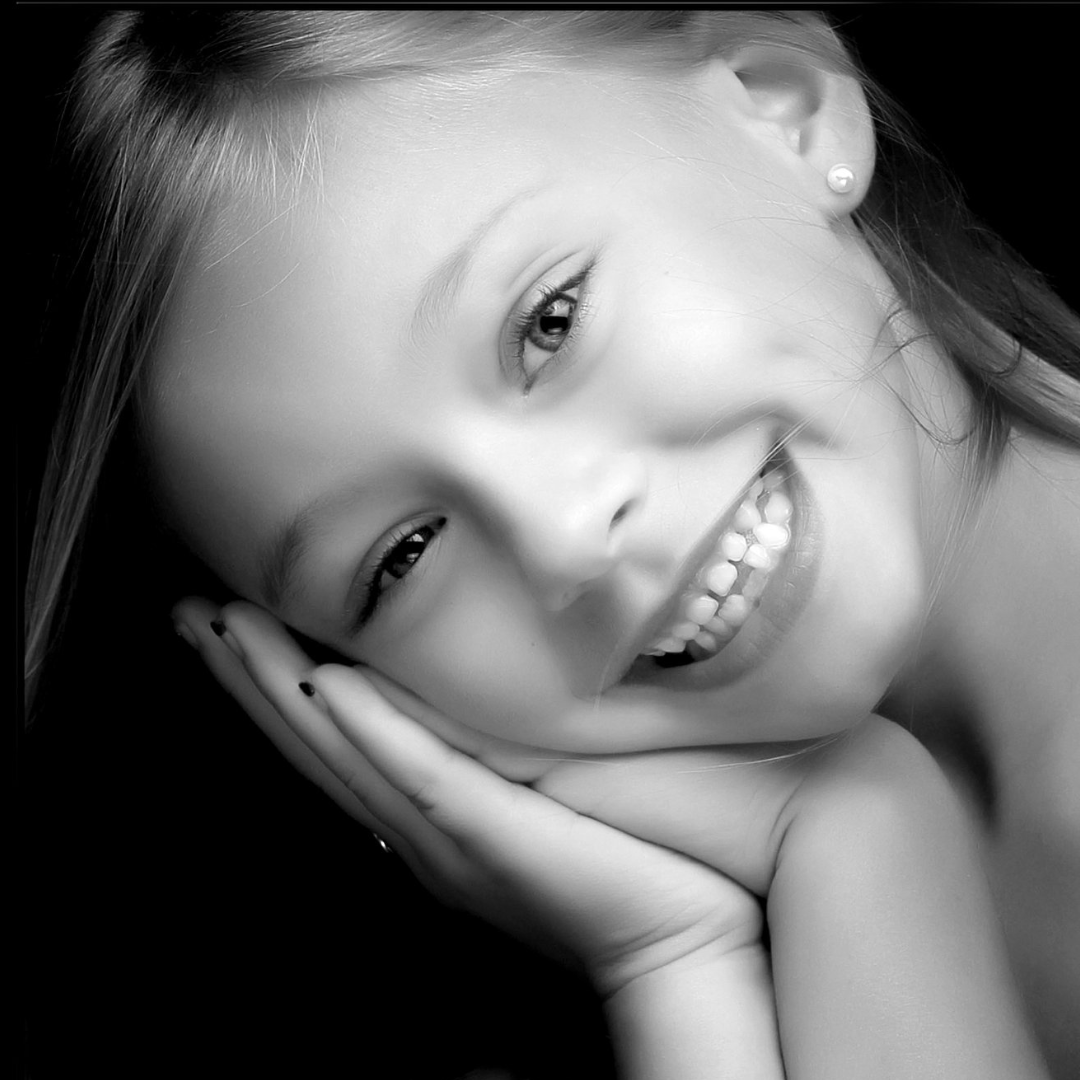
The studio does not guarantee a particular expression or mood. It simply removes some of the variables that can compete with the portrait.
When fewer things demand attention, small expressions become more visible.
A slight smile, a serious look, a raised eyebrow or the way a child naturally holds their hands can become the entire point of the photograph.
Controlled Does Not Have to Mean Stiff
Some parents hear “studio portrait” and imagine a child sitting rigidly on a stool while being told to smile.
That is one way to photograph a child, but it is not the only way.
Studio photography can include movement, conversation, standing, sitting, close portraits, full-length photographs and interaction between siblings or family members.
Control refers to the environment, not complete control over the child.
The photographer can control the light and background while allowing space for genuine expressions and personality.
A studio portrait does not have to remove everything playful about childhood. It can simply give that personality a cleaner stage.
The goal is not to force a child into one expression. It is to create enough visual and emotional space to notice what the child naturally gives.
The Studio Can Slow the Session Down
Outdoor locations often encourage movement from one background to another.
That variety can be valuable, but it can also create pressure to keep moving before the light changes or a location becomes busy.
In the studio, the photographer can build the portrait more deliberately.
A small change in light, camera height, body angle or hand placement can create a noticeably different result without asking the child to walk to another setting.
Slowing down does not mean making a child sit still for an unreasonable length of time.
It means the photographer can pay closer attention to details:
- Whether the child’s posture feels natural
- Where the eyes are directed
- Whether the hands appear tense
- How the light shapes the face
- Whether clothing needs a small adjustment
- Whether the background supports or competes with the child
- When an expression feels genuine rather than requested
These details can matter when the goal is a portrait designed to remain meaningful well beyond the session.
Outdoor Photography Wins When Movement Is the Story
The studio is not the right answer for every child or every portrait.
Some children become more expressive when they can walk, run, explore or interact with a larger environment.
An outdoor session may be the stronger choice when:
- Movement is central to the intended photographs
- The child enjoys nature and unfamiliar surroundings
- The location has personal meaning
- The family wants environmental variety
- Seasonal color is important to the portrait
- The session includes active interaction
- The desired result feels casual, expansive or connected to a particular place
Outdoor portraits can also show scale and context in ways a studio portrait may not.
A small child walking beside a parent, siblings running through an open area or a family returning to a meaningful location can tell a story that depends on the environment.
When the setting contributes to the meaning of the photograph, it should not be treated as a distraction.
Age Alone Should Not Make the Decision
It is tempting to decide that very young children belong outdoors because they need room to move, while older children belong in the studio because they can follow direction.
Real children are not that predictable.
A young child may enjoy the quieter structure of a studio. An older child may become more natural while walking outdoors. Siblings close in age may respond very differently to the same environment.
Age provides some useful context, but personality, energy, interests and the intended portrait matter just as much.
Parents know how their children respond to new spaces, crowds, weather and changes in routine. The photographer understands how different environments affect light, composition, pacing and expression.
The best choice comes from combining both kinds of knowledge.
The Weather Is More Than a Backup-Plan Problem
Weather is usually discussed as a scheduling issue.
Will it rain? Will the session need to move? Will the leaves have changed?
For children’s portraits, weather also affects the experience during the session.
Heat, cold, humidity and wind can influence clothing, hair, movement and how long a child remains comfortable. Even conditions that look beautiful in a photograph may not feel comfortable to the person being photographed.
This does not mean families should avoid outdoor sessions. It means weather should be considered as part of the portrait plan rather than treated only as an inconvenience if something goes wrong.
A studio session offers a more consistent environment when predictability is important.
Do not assume a guaranteed weather, rescheduling or studio-substitution policy. Current options must always be confirmed directly with Staske Photography.
Studio Portraits Put More Pressure on the Photographer
A dramatic outdoor background can immediately attract attention.
In a simple studio portrait, there may be nowhere for weak lighting, careless posing or an uncertain expression to hide.
That is one reason studio children’s photography is not automatically the easier option.
The photographer has to make deliberate decisions about:
- Light direction
- Shadow detail
- Camera height
- Lens choice
- Subject distance
- Background tone
- Body position
- Hand placement
- Expression
- Timing
The simpler the composition, the more visible those decisions become.
When the portrait works, the viewer should notice the child before noticing the technique.
That simplicity is not the absence of creativity. It is the result of removing elements that are not helping the photograph. The Staske Photography studio in Savoy is built around exactly that kind of controlled, deliberate work.
A Studio Portrait Can Show More by Including Less
Parents sometimes worry that a studio background will not say enough about their child.
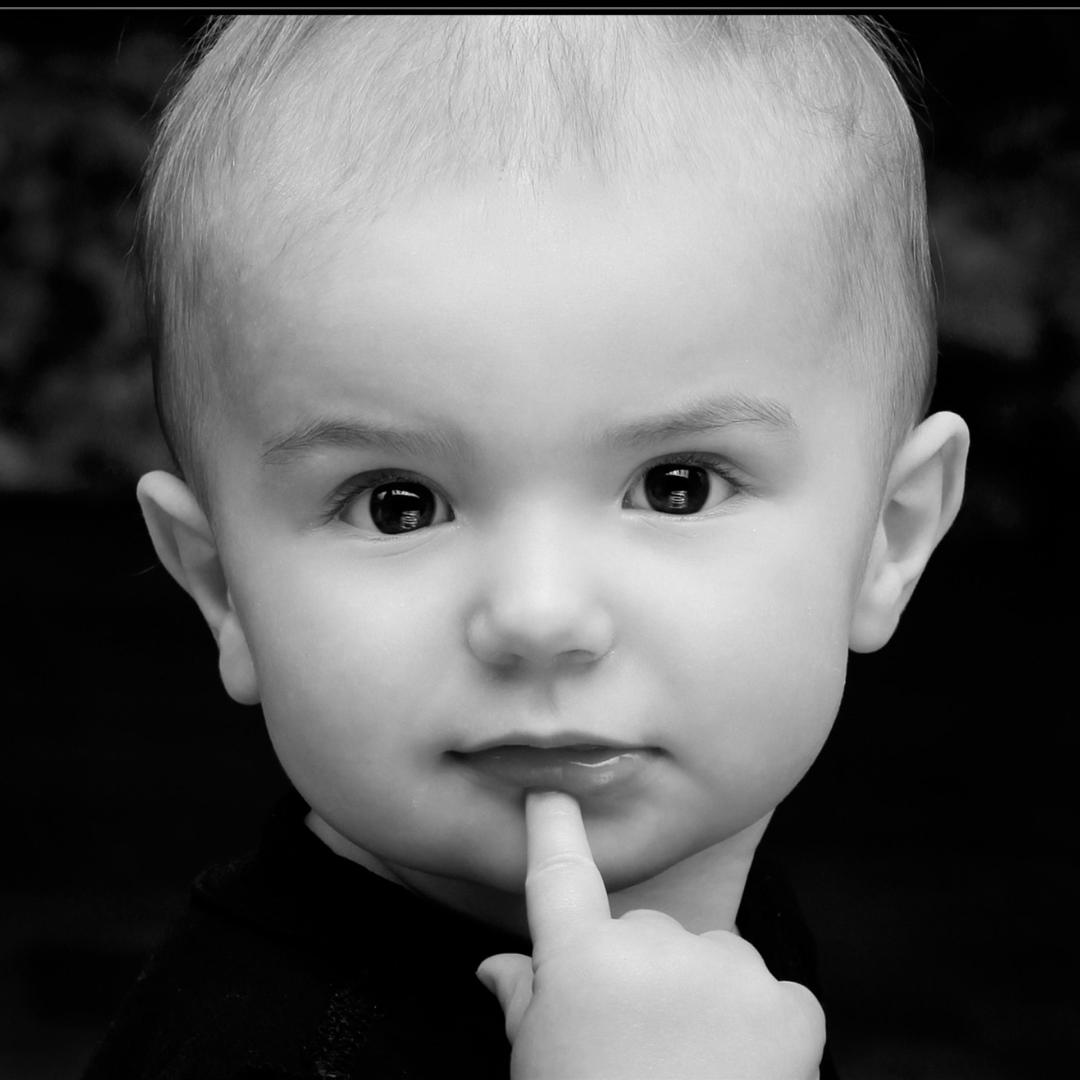
But personality does not come only from locations or props.
It can appear in:
- The way a child looks directly into the camera
- A thoughtful expression
- The shape of a natural smile
- The way siblings lean toward or away from each other
- A familiar gesture
- A carefully chosen piece of clothing
- The way the child stands when they stop trying to pose
- A small detail that parents immediately recognize
A simplified portrait can make these characteristics easier to see.
Years later, the background may be the least important part of the photograph.
The expression may be what brings the child’s voice, mannerisms and personality back to the parent who remembers that stage of life.
Do Not Choose Based Only on What Is Popular
Outdoor golden-hour photography has a recognizable look. So do clean studio portraits and more dramatic fine-art children’s photography.
Trends can be useful for discovering what appeals to you, but popularity is not the same as suitability.
Before choosing, ask:
- What do I want to notice first in the photograph?
- Do I want the location to be part of the story?
- Does my child enjoy active outdoor environments?
- Would fewer distractions make the experience easier?
- Do I want movement or a more concentrated expression?
- Where might the finished portrait be displayed?
- Does the intended style feel like my child?
- Am I choosing this because it fits, or because it is what I see most often online?
There is no prize for choosing the most fashionable setting.
The setting should serve the child and the portrait.
How Staske Photography Helps Families Decide
Families do not have to choose between studio and outdoor photography based on a few sample images alone.
The complimentary portrait consultation provides an opportunity to discuss:
- The child’s age and personality
- How the child responds to unfamiliar environments
- The desired portrait style
- Whether movement or focused expression is more important
- Clothing and color preferences
- The season and weather
- Whether the location has personal meaning
- Where the finished photographs may be used or displayed
- Any accessibility or comfort considerations the family wants to share
Roberta helps families plan the experience, while Paul makes the photographic decisions involving light, composition, posing and expression.
The Staske Photography studio is located in Savoy, Illinois, near Champaign, and operates by appointment.
Do not assume that every session can combine studio and outdoor photography. Any combined approach must depend on the current session structure, timing, availability and agreed plan. To see how this fits within the broader family portrait photography experience, the consultation is the right place to ask. You can also learn more about the Cherished Children portrait experience before you plan.
Frequently Asked Questions
The Best Setting Is the One That Helps Us See Your Child
Outdoor photographs are not always better.
Studio photographs are not always better either.
A background should not win simply because it is colorful, popular or convenient. It should support the child and the photograph being created.
For one child, that may mean room to run through an outdoor setting that feels full of energy. For another, it may mean a quieter studio where distractions fall away and a small expression becomes the entire portrait.
The real decision is not studio versus outdoor.
It is whether the environment helps us see the child clearly.
That is the portrait worth creating.
Paul Staske
Professional Photographer
Responsible for photography, lighting, posing, and image creation. Roberta and Paul are dedicated to creating a luxury photography experience that celebrates your unique story through timeless imagery.
Not Sure Whether Studio or Outdoor Is Right for Your Child?
Talk with Roberta about your child, the expressions you want to preserve and the type of environment that may support the strongest portrait. Your complimentary consultation can help you compare the current studio and outdoor options.
Complimentary Portrait Consultation

