What to Expect at Your First Boudoir Photography Session in Champaign, IL

Roberta Staske
Owner & Studio Director

What You'll Learn
A first boudoir photography session can feel exciting and unfamiliar at the same time.
Most people arrive with questions.
What should I wear? Will someone tell me how to pose? What if I feel nervous? How private is the experience? What happens to the photographs afterward?
You do not need to arrive with all the answers.
A thoughtfully planned boudoir experience should give you clear information before the photography begins. You should understand the process, have opportunities to ask questions, and know how your preferences and boundaries will be handled.
At Staske Photography, the conversation begins before the camera comes out.
I want to understand why you are considering a session, what you feel comfortable wearing, what concerns you have, and what kind of portraits feel right for you.
This guide explains what someone can expect before, during, and after a first boudoir photography session. Specific services, products, policies, and options should always be confirmed during your consultation because every studio and every experience can be different.
Before You Schedule Your First Boudoir Session
The first step is not buying lingerie or practicing poses.
It is learning how the photographer works.
A consultation gives you an opportunity to ask practical questions and decide whether the experience feels like a good fit.
Before scheduling, ask about:
- How the session is planned
- Who will be present
- Where changing takes place
- Whether hair and makeup options are available
- How wardrobe is selected
- How posing and expression are directed
- How privacy is handled
- How photographs are reviewed
- What editing is included
- What products or digital options are currently available
- How image-use permission works
- What is included and what may be selected separately
You should not feel pressured to make a decision before you understand the process.
Think about what you want from the experience
People consider boudoir photography for many reasons.
A session may mark a personal milestone, celebrate a relationship, create a meaningful gift, document a stage of life, or simply satisfy a long-held curiosity.
You do not need a dramatic reason.
You also do not need to share personal information that you would prefer to keep private.
The purpose of discussing your goals is not to force a story onto the session. It is to help the photographer understand the tone, clothing, level of coverage, and final result you are considering.
Review the photographer's real portfolio
Look beyond one or two featured photographs.
A broader portfolio can help you evaluate:
- Lighting
- Posing
- Expression
- Skin tone
- Retouching style
- Wardrobe variety
- Background variety
- How different people are photographed
- Whether the work feels consistent
Do not assume that every photograph on an inspiration board can or should be recreated.
Lighting, body position, clothing, furniture, camera angle, and the available environment all affect the final result.
Inspiration can help communicate a feeling, but your session should not require you to imitate someone else.
Planning What to Wear
Boudoir photography does not require one particular type of clothing.
Lingerie may be part of the session, but it is not the only option.
Depending on your preferences and the current studio experience, possibilities may include:
- A bodysuit
- A robe
- A slip
- A camisole
- A fitted dress
- An oversized shirt
- A sweater
- A jacket
- A meaningful garment
- Simple fabric or carefully controlled coverage
- Clothing that feels polished without being revealing
The right wardrobe is clothing that fits properly, supports the intended portrait, and allows you to move with reasonable comfort.
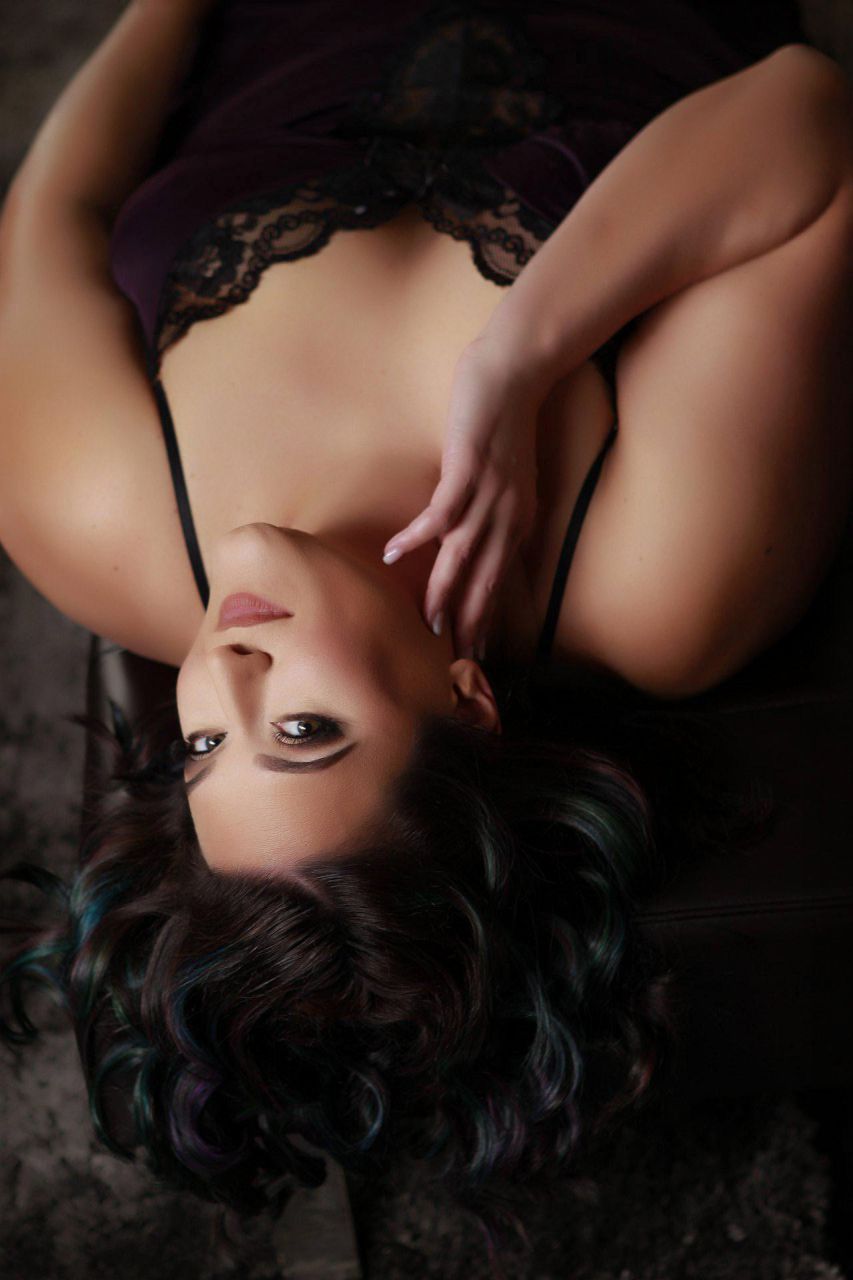
Fit matters more than the size printed on the label
Boudoir posing often involves sitting, standing, reclining, turning, and changing the position of the shoulders, arms, and legs.
An item may look attractive while standing but shift, pull, roll, or create discomfort in another pose.
Try each item before the session.
Sit in it.
Move in it.
Look at it from several angles.
Check straps, closures, cups, waistbands, seams, and any areas that may require frequent adjustment.
The number on the label is not visible in the finished portrait. The way the garment fits and the way you feel while wearing it matter more.
Bring choices that create useful variety
Several carefully chosen options are usually more useful than a suitcase filled with unrelated clothing.
Variety can come from changes in:
- Coverage
- Texture
- Color
- Structure
- Neckline
- Sleeves
- Layers
- Accessories
- Formality
Do not assume that every item brought to the studio must be photographed.
The final selection should support a cohesive portrait collection and the available session plan.
Be careful with unfamiliar clothing
A photography session is not the best time to discover that an item scratches, slips, pinches, or limits movement.
Avoid removing tags from expensive new clothing until you have confirmed the fit and decided it belongs in the plan.
Also consider whether an item requires special undergarments, difficult closures, adhesive products, or constant adjustment.
Discuss wardrobe questions before the session rather than waiting until photography begins.
Do not choose wardrobe only by asking whether it looks attractive on a hanger. Ask whether it fits comfortably while standing, sitting, turning, and reclining. Movement affects how clothing photographs.
Hair, Makeup, and Personal Preparation
The goal of preparation is not to become a different person.
It is to arrive feeling ready and to reduce avoidable distractions.
Before relying on any hair or makeup service, verify what is included in the current Staske Photography experience.
Do not assume that professional hair or makeup is automatically included.
Avoid last-minute experiments
The days immediately before a portrait session are usually not the ideal time to test a dramatic haircut, unfamiliar cosmetic treatment, new tanning product, or untested skincare routine.
Skin can react unpredictably.
A new hairstyle may require more adjustment than expected.
A tanning product may photograph unevenly or transfer onto clothing.
If you plan any personal-care service, allow enough time for the result to settle and follow guidance from the qualified professional providing that service.
This article does not provide medical, dermatological, or cosmetic-treatment advice.
Pay attention to small details
Small details can become more visible in close photographs.
Depending on what will be shown, consider:
- Nails
- Toenails
- Hair ties around the wrist
- Temporary marks from tight clothing
- Clothing tags
- Lint
- Wrinkled garments
- Worn straps
- Jewelry
- Shoes
- Any accessories included in the plan
You do not need to pursue perfection.
The practical goal is to prevent minor issues from distracting you during the session.
Pack before the session day
Prepare clothing and accessories in advance.
A simple packing list may include:
- Selected clothing
- Shoes
- Jewelry
- Accessories
- Any verified personal item included in the plan
- Garment-care supplies
- Personal grooming items
- Comfortable clothing for arrival and departure
Only bring props, meaningful objects, or special items after discussing them with the photographer.
Not every object will fit the visual direction, available time, or privacy requirements.
Privacy, Boundaries, and Comfort
Privacy should be discussed before the photography begins.
Do not assume that every photographer uses the same policy.
Ask who will be present, how changing is handled, how photographs are stored and reviewed, and what permission is required before an image can be displayed publicly.
Ask specifically about image use
Scheduling a session, purchasing photographs, and permitting public image use are separate subjects that should be clearly explained through the studio's current process and agreements.
Before scheduling, ask:
- Whether images may be used on the website
- Whether images may appear on social media
- Whether identifying information is attached
- Whether anonymous image use is available
- How permission choices are recorded
- Whether permission can be limited to selected photographs
- What happens if you do not approve public display
Do not rely on assumptions or verbal summaries.
Review the current written terms before agreeing.
This article must not promise privacy terms that differ from the current Staske Photography contract or consent process.
Discuss your boundaries
People have different comfort levels.
One person may want a more covered portrait collection. Another may be comfortable with a wider range of wardrobe and posing.
Neither preference needs to be defended.
Before the session, discuss:
- Clothing coverage
- Poses you do not want
- Areas you prefer not to emphasize
- Whether implied coverage is acceptable
- Whether you are comfortable with close crops
- Who may be present
- Whether any personal or relationship details should remain private
Clear boundaries help the photographer plan responsibly.
You should also understand how to communicate if something feels uncomfortable during the session.
Comfort does not mean every pose feels familiar
Directed portrait posing can feel unfamiliar because the position is chosen for the camera rather than for everyday movement.
A pose may involve a small change to posture, shoulder angle, hand placement, chin position, or weight distribution.
Unfamiliar does not automatically mean unsafe or inappropriate.
However, physical pain, emotional distress, or a crossed boundary should not be ignored.
Tell the photographer if you need a pause or adjustment.
You Do Not Need to Know How to Pose
One of the most common concerns about boudoir photography is:
"I do not know how to pose."
You are not expected to know.
Posing is part of the photographer's responsibility.
Detailed guidance may include:
- Where to place your feet
- How to distribute your weight
- How to position your hands
- Where to direct your eyes
- How to angle your shoulders
- How to adjust your chin
- When to point or relax the toes
- How to create shape through posture
- When to breathe, pause, or soften an expression
Small adjustments can make a significant visual difference.
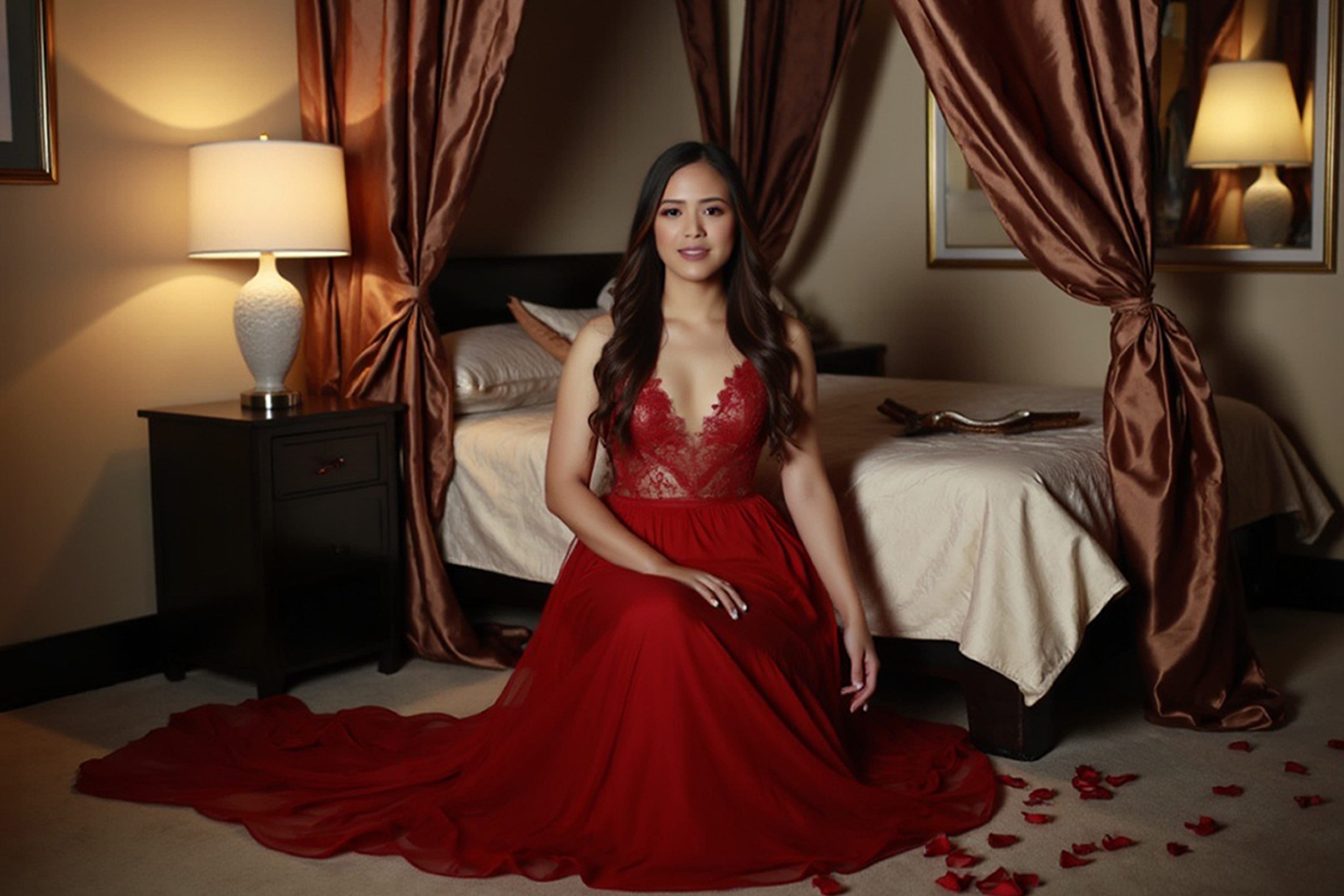
Camera position changes the portrait
The photographer is also making technical decisions that may not be obvious during the session.
Camera height, subject distance, lens choice, lighting direction, and background distance all affect how the body and face appear.
A camera placed too close with an unsuitable lens can exaggerate the nearest part of the body.
Lighting placed at the wrong angle can create distracting shadows or flatten shape.
A background with too much detail can compete with the person.
You do not need to manage those technical choices.
Your role is to follow clear direction, communicate honestly, and ask for clarification when needed.
Expression needs guidance too
Boudoir portraits do not require one fixed expression.
A complete collection may include:
- Direct eye contact
- A softer expression
- A natural smile
- A quieter reflective moment
- Movement
- Looking away from the camera
- Details that do not show the full face
Expressions should fit the portrait rather than follow a single formula.
If an expression feels forced, the photographer may change the direction, create movement, or give you a moment to reset.
What Happens During the Session
The exact order should follow the current Staske Photography process, but a planned session generally moves through several stages.
Arrival and review
Before photography begins, the photographer may review the selected wardrobe, confirm the session plan, answer final questions, and discuss any boundaries or concerns.
This is also the time to mention:
- A change in comfort level
- A clothing issue
- A physical limitation
- A new concern
- A pose or idea you no longer want
- Something important that was not discussed earlier
Do not wait until the end of the session to raise a concern that affects the photography.
Beginning with clear direction
The first photographs do not need to be the most complex.
Starting with clear, manageable direction can help you understand the pace and how the photographer communicates.
You may be asked to make adjustments that feel very small.
A slight change in the chin, shoulders, hands, or legs can alter the portrait.
The photographer may also adjust:
- Light position
- Camera angle
- Furniture
- Fabric
- Clothing
- Hair
- Background
- Distance from the camera
These changes are part of building the photograph.
Moving through wardrobe and background changes
Wardrobe changes should follow the planned session rather than happen randomly.
Each change uses time and may require adjustments to lighting, posing, accessories, and background.
More outfits do not automatically create a stronger final collection.
A smaller number of well-planned looks may provide better variety than many unrelated items.
Taking breaks when needed
Boudoir posing can involve muscles and positions that are not part of ordinary movement.
Tell the photographer if you need to rest, stretch, adjust clothing, drink water, or change position.
Do not conceal pain or dizziness to finish a pose.
The goal is to create portraits responsibly, not to endure physical discomfort for the camera.
What Happens After the Photography
Ask about the complete post-session process before you schedule.
Different studios handle image review, editing, products, digital files, and delivery differently.
Do not assume the process matches another photographer you have used.
Image review and selection
Confirm:
- How images are reviewed
- When selections are made
- Whether images are selected at the studio or through another method
- Who may attend the selection appointment
- What is included
- What can be selected separately
- Whether unselected images are retained
- What current products and digital options are available
Only publish details that match the verified Staske Photography process.
Retouching
Ask the photographer to explain their editing approach.
Retouching may involve adjustments such as:
- Color
- Exposure
- Contrast
- Temporary skin distractions
- Clothing details
- Background distractions
- Image cropping
Do not assume that extensive body reshaping is included or that every requested change will be made.
The photographer should explain the current editing approach and any limits before final decisions are made.
This article must not claim that Staske Photography performs a particular type of retouching unless it is verified.
Finished photographs
Think about how you want to experience the photographs after the session.
Verified options may include printed artwork, an album, digital images, gifts, or a combination of formats.
Only mention specific Staske products that are confirmed through the current website or business information.
Do not invent a product menu, package, price, or delivery schedule.
Public sharing is not required for the session to matter
A boudoir session can remain personal.
Someone may choose to display approved images, share selected photographs privately, give them to a partner, or keep the complete experience private.
The decision should follow the current written agreement and the client's verified permission choices.
Do not publicly share a photograph merely because it was created during a session.
Frequently Asked Questions
Your First Session Should Begin With Clear Information
You do not need to arrive knowing how to pose, what every photograph should look like, or how the full experience works.
That guidance should begin before the session.
A thoughtful consultation gives you a chance to understand the process, discuss wardrobe, ask about privacy, establish boundaries, and decide whether the photographer feels like the right fit.
During the session, clear direction should allow you to focus on one adjustment at a time.
Afterward, you should understand how images are reviewed, what editing is provided, what options are available, and how permission for any public use is handled.
When I speak with someone considering their first boudoir session, I want them to feel informed rather than pressured.
The experience should respect the person in front of the camera.
If you are curious about the complete Staske Photography boudoir experience, you can learn more about how we plan each session. You can also meet Roberta and Paul to learn more about how we work together.
The Eyes See What the Heart Feels.
Roberta Staske
Owner & Studio Director
Responsible for client experience, consultations, marketing, and creative direction. Roberta and Paul are dedicated to creating a luxury photography experience that celebrates your unique story through timeless imagery.
Curious About Planning Your First Boudoir Session?
Talk with Roberta about your questions, wardrobe ideas, privacy preferences, and what you would want from a thoughtfully planned boudoir experience.
Plan Your Boudoir Consultation


