How to Choose a Boudoir Photographer in Champaign, IL

Roberta Staske
Owner & Studio Director

What You'll Learn
Choosing a boudoir photographer is a personal decision.
You are not simply hiring someone who owns a camera or produces attractive images. You are choosing the person, environment and process that will shape an experience in which comfort, communication and trust matter.
A beautiful portfolio is important, but it does not answer every question. You also need to understand how the photographer prepares clients, guides posing, handles privacy, approaches retouching and helps people view and select their photographs.
If you are searching for a boudoir photographer in Champaign, Urbana, Savoy or elsewhere in Central Illinois, comparing these details can help you make a decision based on more than a few favorite images.
This guide explains what to review, what to ask and what should be clear before you book.
The Short Answer
Choose a boudoir photographer whose work is consistent, whose communication makes you feel respected and whose process is clearly explained before you commit.
Before booking, ask about:
- The complete session process
- Privacy and image-sharing choices
- Who will be present
- Studio location and privacy
- Clothing and preparation guidance
- Posing and expression guidance
- Retouching style
- How photographs are viewed and selected
- What is and is not included
- What happens if you have questions or concerns
You should not feel pressured to decide before you understand the experience.
Look Beyond a Few Favorite Portfolio Images
A photographer's portfolio is one of the best places to begin, but do not evaluate it based on one dramatic image.
Look across several sessions and subjects.
Ask yourself:
- Is the lighting consistently flattering?
- Are skin tones handled naturally?
- Do expressions feel varied and believable?
- Are different body types photographed thoughtfully?
- Does the posing look intentional?
- Do the images still look like real people?
- Is the editing style consistent?
- Do you like the overall mood, color and level of contrast?
- Can you imagine yourself in this style?
Some photographers create bright, soft portraits. Others use deeper shadows, dramatic light or a more editorial approach. None of these styles is automatically correct. What matters is whether the photographer's established work matches what you want.
A portfolio should also help you understand whether the photographer can create variety. Look for close portraits, wider compositions, seated and standing poses, expressions and details.
Do not expect every full client gallery to be publicly available. Boudoir photography involves privacy, and many clients may choose not to share their photographs. The photographer can still explain the consistency and structure of their work during a consultation.
Ask How Privacy and Image Sharing Are Handled
Privacy should be discussed before the session, not discovered afterward.
A photograph appearing in a public portfolio does not necessarily mean every client's photographs are shared. Different photographers may use different agreements, permissions and image-sharing practices.
Ask clear questions:
- Will any photograph be shared without my specific permission?
- When are image-sharing choices discussed?
- Can I decline public sharing?
- Can I approve specific images while keeping others private?
- Where might approved photographs appear?
- Who can access the photographs during editing and ordering?
- How are galleries or viewing appointments handled?
- How long are files retained?
- Are privacy expectations documented?
Do not assume the answers. Ask the photographer to explain their actual process.
If privacy is particularly important because of your work, family, community or personal circumstances, say that during the consultation. A professional conversation should allow you to understand your choices before photography begins.
This article must not publish a rigid Staske Photography privacy promise unless the exact policy has been verified. Instead, explain that clients should discuss their privacy and image-sharing preferences directly with Roberta during the Complimentary Boudoir Consultation.
Understand Who Will Be Present
Before booking, ask who will be present during the session.
Depending on the studio and planned experience, this may include the photographer, a studio team member, a hair or makeup professional, or another person involved in the session.
Useful questions include:
- Who will photograph the session?
- Will anyone else be in the studio?
- Is hair or makeup part of the planned experience?
- Can I ask questions about who will be present before booking?
- Are guests or support people permitted?
- Will anyone enter the photography space during the session?
Do not assume that every studio has the same guest policy or team structure.
The photographer's gender alone does not determine whether a session is professional or respectful. Communication, boundaries, business practices, experience and the way concerns are handled are more useful evaluation criteria.
You should know who you are working with and feel comfortable asking questions before the session date.
Evaluate the Studio Environment
A boudoir studio should support privacy, comfort and the visual style shown in the photographer's portfolio.
When reviewing a studio, consider:
- Whether it operates by appointment
- How private the photography areas are
- Where clients change clothing
- Who may enter during the session
- Whether the setting looks clean and professionally maintained
- Whether the furniture and sets match the photographer's portfolio
- Whether the location is clearly explained
- Whether accessibility needs can be discussed
- Whether the temperature and physical environment can support the planned clothing
The Staske Photography studio is located in Savoy, Illinois, near Champaign, and operates by appointment. You can learn more about the Staske Photography studio in Savoy before arranging your consultation.
If a photographer works in rented spaces, hotels, client homes or changing locations, ask how privacy, access, safety and consistency are managed.
The setting does not need to be large or elaborate, but it should match the experience being presented.
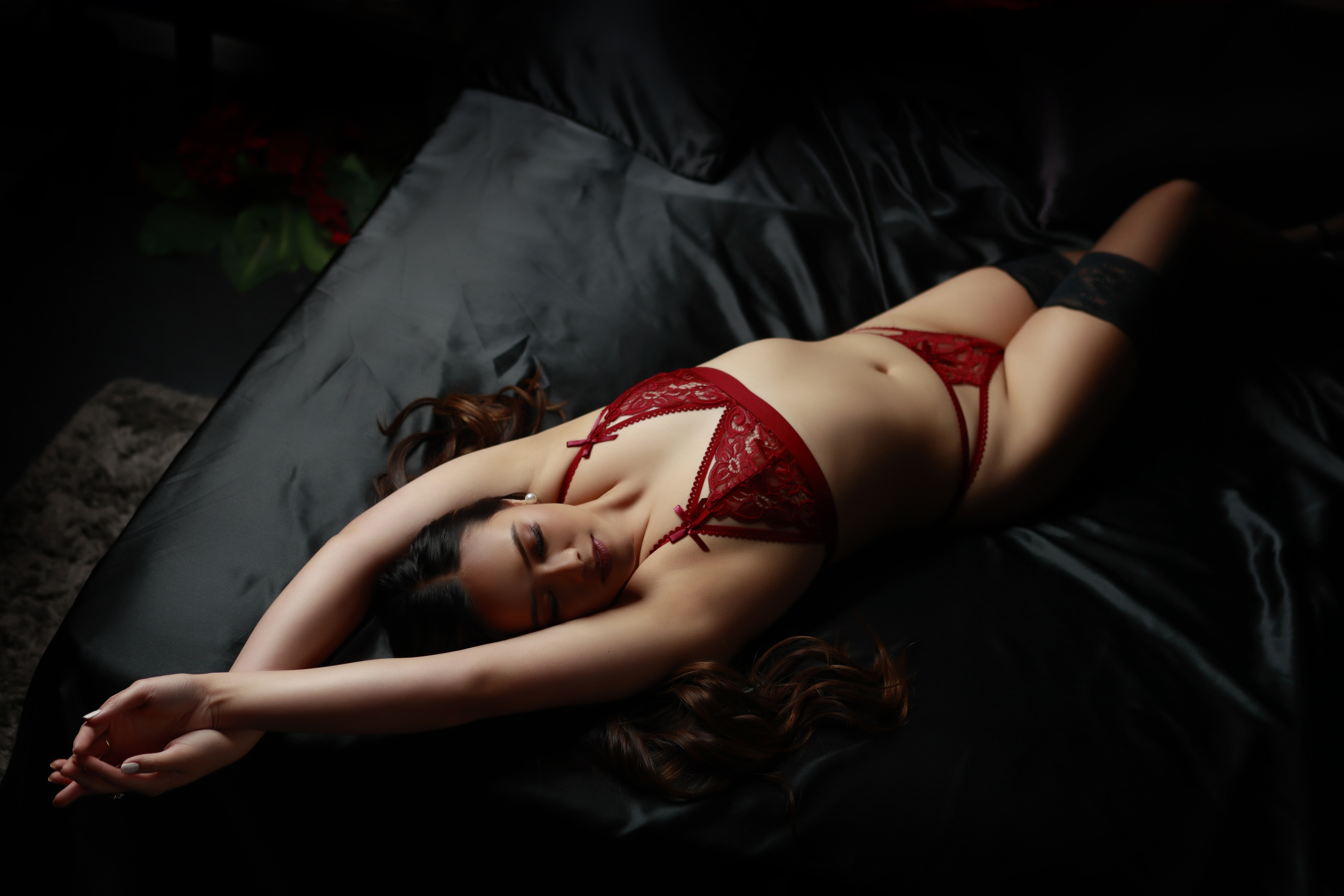
Clothing, Posing and Retouching
Ask About Clothing and Preparation Guidance
Many people worry about what to wear before they worry about anything else.
A professional photographer should be able to explain how clothing choices affect fit, movement, posing and the overall style of the photographs.
Ask whether guidance is provided for:
- Selecting clothing
- Choosing colors and textures
- Planning different levels of coverage
- Using items you already own
- Avoiding fit problems
- Preparing hair and skin
- Deciding what to bring
- Selecting meaningful personal items
- Planning for glasses, jewelry or other details
The photographer should not make you feel that you need a particular body type or expensive wardrobe.
The full Staske clothing guide already covers this subject. Link naturally to the verified article on what to wear for a boudoir session rather than repeating its complete content here.
You Should Not Need to Know How to Pose
A common concern is: "I do not know how to pose."
Most clients are not professional models, and they should not be expected to direct their own session.
Ask how the photographer provides guidance with:
- Body position
- Hands
- Facial expression
- Where to look
- Posture
- Movement
- Transitions between poses
- Adjustments for comfort
- Clothing and fabric placement
Clear direction should feel supportive, not confusing or critical.
The photographer should also be willing to adapt when a pose feels physically uncomfortable or does not fit the client's range of movement. Attractive posing should not require someone to ignore pain or a physical limitation.
You can ask during the consultation how much direction is provided and what happens if you feel uncertain during the session.
Discuss Retouching Before You Book
Editing style can significantly affect the final photographs.
Some photographers use lighter corrections. Others apply more noticeable skin work, shaping or stylized color treatment.
Review the portfolio carefully and ask:
- What is normally retouched?
- Are temporary blemishes addressed?
- How are skin texture and natural features handled?
- Are scars, stretch marks or other features changed automatically?
- Can preferences be discussed?
- Will the final images resemble the portfolio?
- Are heavily altered body changes part of the photographer's normal process?
Do not assume that more retouching creates a better photograph.
The goal should be to understand the photographer's established style and decide whether it matches how you want to be represented.
A photographer should not promise that editing will transform someone into a different person. Expectations should be discussed honestly before booking.

Understand How Photographs Are Viewed and Selected
The session is only one part of the complete experience.
Before booking, ask what happens after the photography is finished.
Questions may include:
- How are the photographs viewed?
- Is there a guided viewing or ordering appointment?
- When are product and image decisions made?
- What types of finished artwork are available?
- Are digital images available?
- How are selections handled?
- When is pricing explained?
- Are any purchases required beyond the session?
- What is the expected timeline?
- How are final products delivered?
This article should not answer these questions with invented Staske package information.
Instead, explain that the photographer should provide clear and current information before the client commits. Clients should understand both the experience and the decision process that follows it.
Questions to Ask a Boudoir Photographer
Before booking, consider asking:
- How would you describe your photography style?
- Can I see consistent examples from several sessions?
- How do you handle privacy and image-sharing permission?
- Who will be present during the session?
- Where will the photography take place?
- How private is the studio?
- What clothing and preparation guidance do you provide?
- How much posing and expression guidance will I receive?
- How do you approach retouching?
- What happens if a pose is uncomfortable?
- How will I view and select my photographs?
- When will I receive complete pricing information?
- What is included, and what is selected separately?
- What are the cancellation and rescheduling terms?
- How are questions handled before the session?
A professional consultation should provide clear answers without making you feel rushed.
Signs You Should Pause Before Booking
One concern does not automatically mean a photographer is unprofessional, but you should feel comfortable asking for clarification.
Pause before booking if:
- Privacy questions are dismissed
- You are pressured to agree to image sharing
- Pricing remains unclear after direct questions
- The public portfolio is inconsistent with what is being promised
- The photographer cannot explain who will be present
- The location or studio arrangement is unclear
- You are expected to know how to pose without guidance
- Your boundaries are treated as inconvenient
- You are encouraged to ignore pain or physical limitations
- The conversation relies on body criticism
- You feel pressured to commit immediately
- Policies are promised verbally but cannot be explained clearly
Trust your response to the conversation. You are allowed to ask more questions, take time to consider the information or decide that the experience is not the right fit.
Quick Tip: Before contacting photographers, write down your three most important priorities. These might be privacy, photography style, posing guidance, studio comfort or understanding the complete investment. Use the same priorities when comparing each consultation.
What Makes the Right Choice Personal?
Two people can review the same photographers and make different decisions.
One person may prefer dramatic lighting and a bold visual style. Another may want softer portraits. One may prioritize complete privacy. Another may be comfortable approving selected images for a portfolio. One may want a bridal experience, while another may be celebrating a birthday, anniversary or personal milestone.
The right photographer is the one whose work and process align with your priorities.
You do not need to choose based on what appears most popular online. Choose based on:
- How you want the photographs to feel
- How comfortable you feel communicating with the photographer
- Whether privacy choices are explained clearly
- Whether the portfolio matches your preferred style
- Whether the process makes sense
- Whether the studio environment fits your needs
- Whether the complete investment is understood
- Whether you feel respected
The Staske Boudoir Planning Process
The Staske Photography experience begins with a Complimentary Boudoir Consultation.
Roberta uses the consultation to learn why you are considering a session, answer questions and discuss the type of experience you may be interested in.
This conversation can include:
- Your reason for considering boudoir photography
- Preferred photography style
- Privacy concerns and image-sharing questions
- Clothing and preparation
- Studio expectations
- People involved in the experience
- How you want the photographs to feel
- What happens before, during and after the session
During the photography session, Paul guides lighting, posing, expression and composition. Clients do not need to arrive knowing how to pose.
After the session, clients have the opportunity to view their photographs and select the images and artwork that matter most to them.
You can learn more about the Staske boudoir photography experience on the main service page. Do not add unverified package details, prices, session length, image quantities, hair or makeup promises, turnaround times or privacy guarantees.
Frequently Asked Questions
Choose a Photographer You Can Communicate With
The right boudoir photographer is not determined by one portfolio image, one review or one starting price.
The complete decision includes the photographer's style, communication, privacy practices, studio environment, guidance and what happens after the session.
You should understand who you will work with, how you will be guided, how your photographs will be handled and what decisions you will make throughout the experience.
Take time to ask direct questions. Pay attention to how those questions are answered. Choose a photographer whose work appeals to you and whose process allows you to feel informed, respected and comfortable moving forward.
Roberta Staske
Owner & Studio Director
Responsible for client experience, consultations, marketing, and creative direction. Roberta and Paul are dedicated to creating a luxury photography experience that celebrates your unique story through timeless imagery.
Looking for the Right Boudoir Experience?
Talk with Roberta about your questions, privacy preferences, photography style and what you want from your Boudoir portrait experience.
Schedule a Complimentary Boudoir Consultation


