How to Choose a Senior Photographer in Champaign-Urbana

Roberta Staske
Owner & Studio Director

What You'll Learn
Choosing a senior photographer is about more than finding someone who owns a good camera or has a few attractive photographs online.
Senior portraits preserve a specific stage in a young person's life. The person you choose will influence how the senior is guided, how comfortable they feel, how personal the photographs become, and what the family ultimately receives.
That makes the decision both practical and personal.
A family may begin by searching for a senior photographer in Champaign-Urbana, reviewing social media, comparing websites, or asking friends for recommendations. Those are useful starting points, but they do not always reveal what the full experience will be like.
The strongest choice is a photographer whose work, guidance, communication, and approach fit the senior standing in front of the camera.
This guide explains what to look for, what questions to ask, and how to compare senior photographers without reducing the decision to a few portfolio images or a single number.
Start With the Senior, Not the Scenery
It is easy to begin by thinking about locations.
You may picture flowers, downtown architecture, a school campus, prairie grass, fall color, or a familiar place in Champaign-Urbana. The setting matters, but it should not be the first or only decision.
Start with the senior.
Consider:
- How do they usually dress?
- Do they feel more comfortable in natural, urban, architectural, or studio settings?
- Are they quiet, expressive, athletic, artistic, formal, casual, or a mixture of several things?
- Are there interests, activities, objects, or relationships that matter to them?
- Do they enjoy being photographed, or does the idea make them nervous?
- What does the family hope to remember about this stage of life?
A location can provide context, but it should not become more important than the person.
The most recognizable background is not automatically the best background. A quieter setting with better light, fewer distractions, and a stronger connection to the senior may produce more meaningful portraits.
When comparing photographers, look for evidence that they adapt the session to different people. If every senior is photographed in the same place, in the same pose, with the same expression, the work may be consistent, but it may not be personal.
I want a senior's photographs to feel connected to who they are, not simply to what is currently popular.
For help comparing local settings, read our guide to the best senior picture locations in Champaign-Urbana.
Review More Than a Photographer's Best Images
Every photographer leads with their strongest work. That is normal.
A homepage or social media profile may show a small selection of photographs created under ideal conditions. Those images can help you understand the photographer's visual style, but they may not show the full range of their work.
Look beyond the first few photographs.
Look for consistency
Review several senior sessions or a broader senior portfolio when one is available.
Ask whether the photographer produces consistent results across:
- Different seniors
- Different clothing styles
- Indoor and outdoor settings
- Close portraits and full-length compositions
- Bright and subdued backgrounds
- Different weather and lighting conditions
- Natural expressions and more polished portraits
Consistency does not mean every photograph should look identical.
It means the photographer can make reliable decisions about light, expression, posing, color, background, and perspective across changing situations.
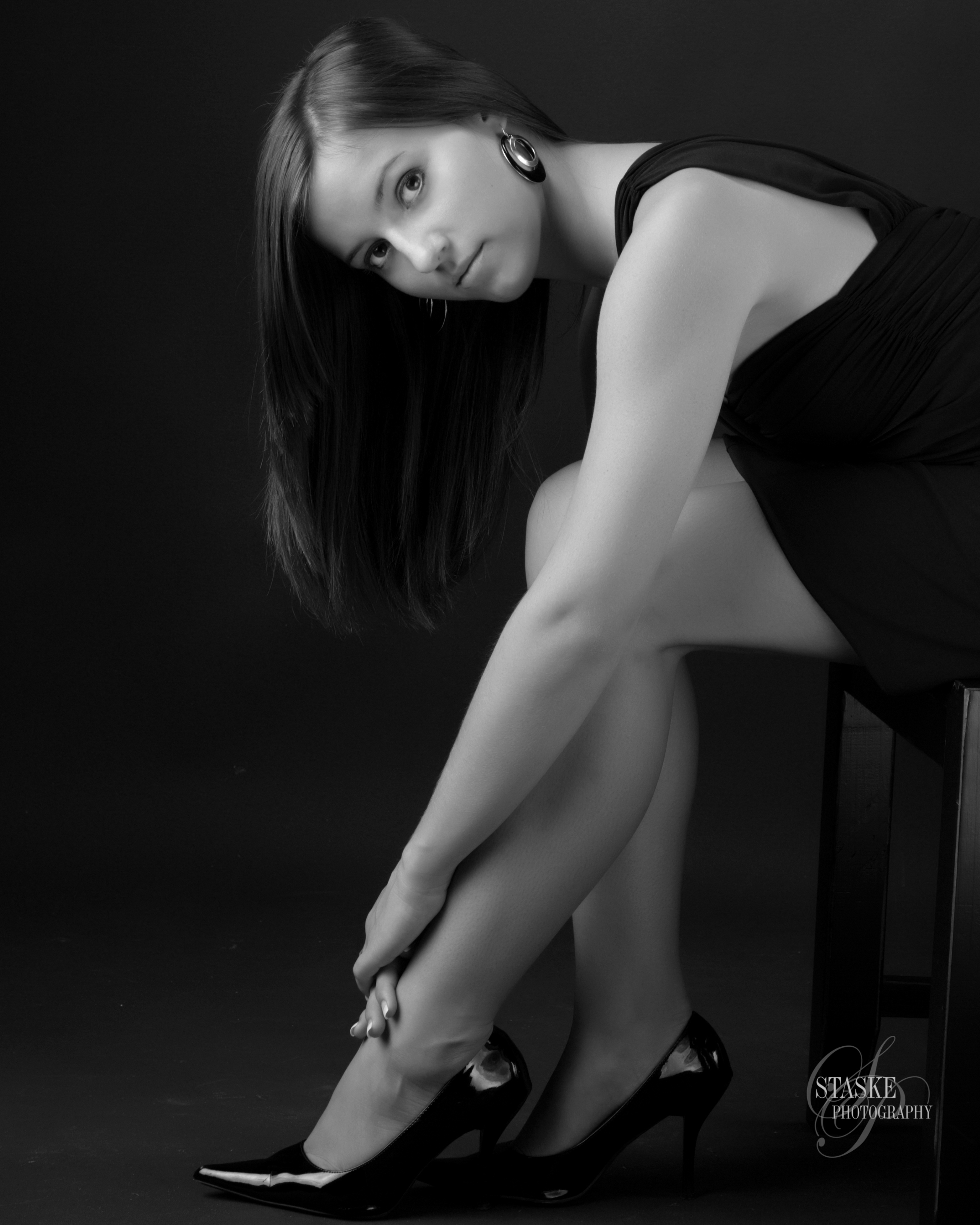
Pay attention to the senior's expression
A technically correct photograph can still feel disconnected if the expression looks forced.
Look closely at faces.
Do the seniors appear comfortable? Do expressions vary, or does every photograph rely on the same smile? Do the eyes feel engaged? Does the senior look confident without appearing unlike themselves?
Expression often depends on what happens before the shutter is pressed.
A photographer may need to give direction, create movement, adjust posture, change the pace, or help the senior stop thinking about the camera.
Those skills are difficult to measure from one photograph, but they become more visible across a complete portfolio.
Study posing and perspective
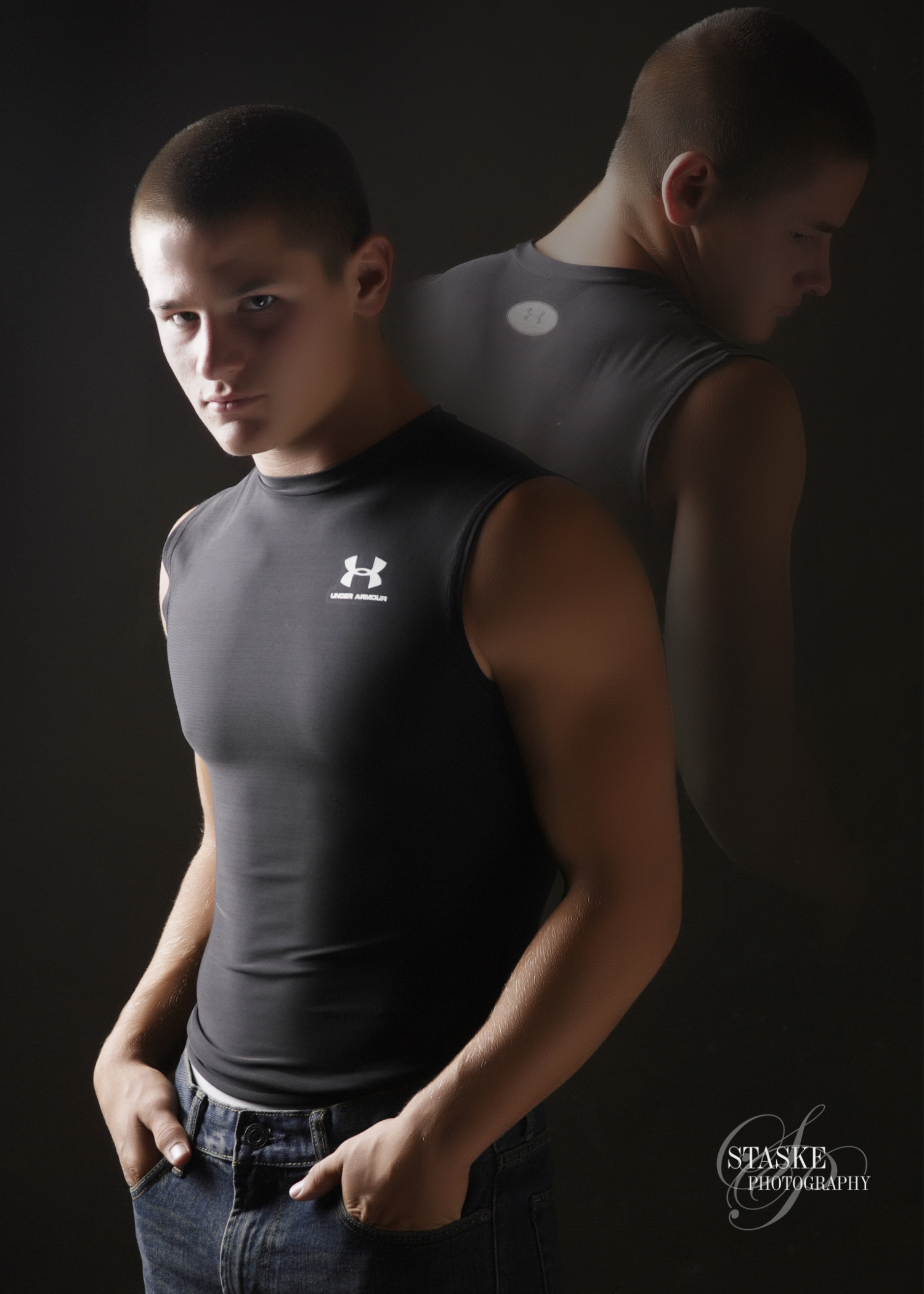
Look at hands, shoulders, posture, body angles, and camera height.
Posing should support the senior rather than call attention to itself. It should also change according to clothing, body position, environment, and the intended crop.
Perspective matters too.
A camera placed too close with a wide lens can exaggerate the nearest part of the body. An unsuitable camera height can make posture feel awkward or change the balance of the portrait.
Strong senior portraiture requires the photographer to manage these technical choices while still keeping the session relaxed.
Look at color and skin tone
Background color, reflected light, surrounding greenery, bright clothing, and mixed indoor light can all affect the way skin appears.
Look for skin tones that feel believable and consistent.
Editing style is a personal preference, but the senior should not disappear beneath aggressive filters, temporary effects, or heavy changes that may quickly feel dated.
A polished portrait can still look natural.
Ask How Direction and Posing Work
Many seniors arrive believing they are not photogenic.
Usually, what they mean is that they do not know what to do when a camera is pointed at them.
They may worry about:
- Where to place their hands
- How to stand
- Whether to smile
- What to do with their chin
- How to avoid looking stiff
- Whether an outfit photographs well
- What happens if they feel awkward
A senior should not need professional modeling experience.
Ask the photographer how they guide someone who feels uncomfortable in front of the camera.
Detailed direction may include:
- Adjusting the feet and weight distribution
- Changing the angle of the shoulders
- Positioning the hands
- Correcting posture
- Guiding chin position
- Creating movement
- Watching small clothing details
- Helping the senior move between expressions
At Staske Photography, Paul provides detailed direction throughout the portrait process. The senior does not need to arrive knowing how to pose. You can meet Roberta and Paul to learn more about how we work together.
Direction should be clear without making the senior feel as though they are performing a complicated routine.
The goal is not to force everyone into identical poses. It is to use guidance that helps the senior appear comfortable, confident, and recognizable.
When reviewing a photographer, do not ask only, "Do I like these pictures?" Also ask, "Could this photographer guide my senior if they feel nervous, uncertain, or uncomfortable in front of the camera?"
Compare the Complete Portrait Experience
Two photographers may both describe their work as senior photography while offering very different experiences.
Before comparing them, understand what happens before, during, and after the session.
Use the following comparison table.
| What to evaluate | Why it matters | A useful question to ask |
|---|---|---|
| Planning | Good preparation can connect clothing, setting, interests, and final goals | How do you help us plan the session? |
| Portfolio | A broader portfolio reveals consistency beyond a few featured images | Can we review more examples of your senior work? |
| Direction | Seniors should not be expected to know how to pose | How do you guide someone who feels nervous? |
| Location approach | A photographer should consider light, access, walking, weather, and background quality | How do you help select a location? |
| Studio option | Indoor options can create a different look and provide greater environmental control | Is studio photography available when appropriate? |
| Personalization | The session should reflect the senior rather than a fixed formula | How can we include interests, activities, or meaningful items? |
| Image selection | Families should understand how photographs are reviewed and selected | What happens after the session? |
| Finished result | Digital files, prints, albums, and wall portraits are different deliverables | What is included, and what may be selected separately? |
| Usage rights | Families should understand how they may use purchased images | What usage and printing permissions are provided? |
| Timeline | Planning should account for school deadlines and family needs | When should we begin the process? |
Before the session
Ask how the photographer helps with decisions such as clothing, setting, personal interests, timing, and the overall visual direction.
Good preparation does not need to make the process complicated. It should reduce uncertainty.
A planning conversation can help identify what matters most and prevent the session from becoming a collection of unrelated ideas.
During the session
Consider how the photographer manages:
- Posing
- Expression
- Clothing details
- Changing light
- Background distractions
- Walking and transitions
- Weather
- Comfort
- Parents or family members who attend
- Personal items, uniforms, instruments, pets, or activities
A photographer is responsible for more than pressing the shutter. They are making continuous decisions that affect the final portrait.
After the session
Ask what happens after the photography is complete.
How are photographs reviewed? How are final selections made? What forms of finished artwork or files are available? What is included, and what is selected separately?
Do not assume every photographer uses the same process.
The lowest initial number may not represent the final amount a family spends. A larger initial figure may include things another photographer offers separately.
The only useful comparison is a complete one.
Consider Location, Studio, and Weather Options
Central Illinois can offer natural, architectural, urban, campus-related, and studio portrait possibilities.
Each option creates a different feeling.
Outdoor locations may provide variety, depth, movement, and seasonal color. They also introduce variables such as weather, wind, heat, humidity, insects, crowds, construction, access rules, and changing light.
Studio photography provides greater control over light, background, privacy, and weather. It may suit a polished outfit, a more formal portrait, or a senior who prefers a quieter environment. You can learn more about the senior portrait experience at Staske Photography to understand what options are available.
Neither option is automatically better.
The stronger choice depends on the senior and the intended result.
Ask whether the photographer recommends settings based on the senior or simply uses the same popular locations for everyone.
Also ask how weather decisions are handled.
A responsible photographer should not guarantee blossoms, peak fall color, snow, a completely empty public location, or perfect weather on a particular date.
Professional photography rules may also apply at parks, gardens, campuses, preserves, and privately controlled locations. Permission requirements should be verified before a session is confirmed.
If a particular setting matters to your family, discuss it early.
Understand What You Are Comparing
Price matters, but it is only meaningful when you understand what the number represents.
One photographer's session fee may cover only the photography time. Another experience may include planning, extended guidance, image review, retouching, artwork design, products, files, or other services.
Do not assume two numbers describe the same thing.
Ask for clear information about:
- What is included before the session
- How much photography time is planned
- Whether outfit or location changes are included
- How final photographs are selected
- What retouching is included
- Whether digital files are included or selected separately
- Whether prints, albums, or wall portraits are available
- Whether there is a minimum purchase
- When payments are due
- How purchased images may be used
A higher price does not automatically guarantee better work.
A lower price does not automatically mean better value.
The purpose of these questions is not to find the photographer who includes the longest list. It is to understand whether the experience and finished result match what your family wants.
Consider the finished photographs
Families often concentrate on the session and postpone thinking about what they want to receive.
Before choosing a photographer, consider how the portraits will be used.
You may want:
- A framed portrait
- Wall artwork
- An album
- Gift prints
- Graduation announcements
- Digital images for personal use
- A combination of printed and digital options
Consider the photographer's communication
Notice how clearly the photographer communicates before you schedule.
Are questions answered directly? Are expectations explained? Does the photographer ask about the senior? Do you understand the next step?
Clear communication before the session is often a useful indicator of what the complete experience will feel like.
Questions to Ask a Senior Photographer
Use this checklist when speaking with a potential senior photographer:
- How do you help us plan the session?
- Can we review a broader selection of your senior portraits?
- How do you guide seniors who do not know how to pose?
- How do you help us choose clothing and locations?
- Can we include sports, music, art, a vehicle, a pet, or another meaningful interest?
- Do you offer studio and outdoor options?
- How are weather and location-access issues handled?
- What happens after the photography session?
- What is included, and what may be purchased separately?
- What finished products or digital options are available?
- How may purchased images be printed and shared?
- How early should we begin planning?
You do not need to turn the conversation into an interview.
The goal is to understand whether the photographer's approach matches your senior and your family.
A useful consultation should also include questions from the photographer.
They should want to understand the senior's personality, comfort level, clothing, interests, and what the family hopes to preserve.
Frequently Asked Questions
Choose the Photographer Who Fits the Senior
Choosing a senior photographer is not about finding the person with the longest list of locations or the lowest starting number.
It is about finding someone who can see the senior, guide them clearly, make thoughtful technical decisions, and create portraits the family will value after this season has passed.
Review the work carefully.
Ask practical questions.
Understand the complete experience.
Most importantly, choose a photographer whose approach feels right for the person being photographed.
When I speak with a family, I want to understand who their senior is before we make decisions about clothing, setting, or style. Paul and I then consider how the technical and personal parts of the session can work together.
The setting should support the senior.
The posing should guide them without making them look like someone else.
The final portraits should preserve more than appearance. They should hold a sense of who that senior was at this particular moment.
If you are also thinking about how to prepare once you have chosen a photographer, our guide on how to prepare for senior pictures can help you plan the next steps.
The Eyes See What the Heart Feels.
Roberta Staske
Owner & Studio Director
Responsible for client experience, consultations, marketing, and creative direction. Roberta and Paul are dedicated to creating a luxury photography experience that celebrates your unique story through timeless imagery.
Ready to Find the Right Senior Portrait Experience?
Talk with Roberta about your senior's personality, interests, clothing, comfort level, and what your family hopes to preserve through their portraits.
Plan Your Senior Portrait Session


